
How To Budget Money - A Clear, Smart Strategy
Learning how to budget money is the most fundamental and empowering skill you can master for your financial health. Contrary to popular belief, a budget isn't about restriction—it's about intention. It’s a strategic plan that gives you permission to spend by aligning your money with your values and goals, whether that's crushing debt, saving for a home, or simply eliminating the anxiety of an unexpected bill.
This definitive guide will walk you through everything from understanding your financial snapshot and choosing the right budgeting method, to practical tips for reducing expenses and making your plan stick for the long haul. Let's transform your relationship with money and build a secure, prosperous future, one dollar at a time.
Why You Need a Budget (Understanding the Importance)
Do you ever find yourself asking, "Where did all my money go?" at the end of the month? You're not alone. Many people view a budget as a restrictive straitjacket for their finances—a complex tool that forces them to cut out all the fun. But what if we told you that's a complete misconception?
At its core, a budget is simply a plan for your money. It's a proactive blueprint that gives every dollar a purpose before you spend it. Rather than being a constraint, a budget is the ultimate tool for financial freedom. It’s about making conscious choices that align your spending with your values and goals, transforming your financial life from reactive to intentional.
Understanding the importance of this practice is the first step toward true financial control. The benefits of budgeting extend far beyond just balancing your checkbook. Here’s why creating a budget is one of the most critical acts of financial planning you can undertake:
- It Eliminates Financial Guesswork: A budget moves you from uncertainty to clarity. You'll know exactly how much money you have coming in, where it needs to go (like rent and bills), and what’s left over. This eliminates stress and surprises.
- It Helps You Achieve Your Goals: Whether your dream is to buy a home, pay off student loans, take a dream vacation, or simply build an emergency fund, a budget is your roadmap. It allows you to strategically allocate money toward these goals, making them achievable realities rather than distant wishes.
- It Reveals Spending Leaks: That daily gourmet coffee or numerous subscription services can add up to hundreds of dollars a month without you even realizing it. A budget acts like a financial magnifying glass, highlighting areas where your money is silently slipping away, so you can plug those leaks.
- It Prevents and Reduces Debt: By planning your expenses and living within your means, you avoid relying on credit cards to cover shortfalls. If you already have debt, a budget is your most powerful weapon for creating a aggressive payoff plan.
- It Reduces Stress and Builds Confidence: Financial uncertainty is a major source of anxiety. When you have a plan, you gain peace of mind. You're no longer worried about an unexpected bill derailing your month. This control builds immense confidence in your ability to manage your life.
In short, a budget isn't about limiting your life; it's about expanding it. It’s the foundational step that empowers you to take control, make informed decisions, and build a secure and prosperous future for yourself. It's the first and most important step in any successful financial planning journey.
Ready to Start? First, Gather Your Financial Snapshot
You've decided to take control. That's the biggest step! But before you can build a plan for the future, you need a clear, honest understanding of your present financial reality. Think of this step as assembling the pieces of a puzzle. You need to see all the pieces—your income, your commitments, and your habits—before you can see the full picture.
This process of gathering your financial snapshot is the most crucial foundational step. Skipping it is like trying to navigate a new city without a map. Here’s how to systematically assemble your financial data.
Step 1: Calculate Your Net Income
The first piece of the puzzle is knowing exactly how much money you have to work with. It's essential to focus on your net income, not your gross salary. Your net income is your take-home pay—the amount that actually lands in your bank account after taxes, health insurance premiums, retirement contributions (like a 401k), and other deductions are taken out.
- If you are a salaried employee: Look at your pay stubs. Your net income per pay period is clearly listed. Multiply this by the number of times you get paid each month (e.g., twice for bi-weekly pay) to get your monthly net income.
- If your income is irregular (e.g., freelancer, gig worker, or commissioned sales): Calculate your average monthly net income by adding up your take-home pay from the last 3-6 months and dividing by the number of months. This estimates a baseline, though you'll learn to budget conservatively later.
This number—your total monthly net income—is the cornerstone of your budget. It's the "fuel" you have for the month.
Step 2: List Your Fixed vs. Variable Expenses
Next, you need to account for where your money is currently going. Expenses generally fall into two categories, and distinguishing between them is key to building a flexible budget.
- Fixed Expenses: These are costs that typically stay the same each month. They are your essential, predictable financial obligations. Examples include:
- Rent or Mortgage
- Car payment
- Insurance premiums (car, health, renters)
- Subscription services (streaming, gym memberships)
- Debt payments (student loans, minimum credit card payments)
- Child care or support payments
- Variable Expenses: These are costs that change from month to month. They can be essential or discretionary. Examples include:
- Groceries
- Gasoline / Transportation
- Utilities (electric, water, gas—may fluctuate)
- Dining out / Entertainment
- Personal care (haircuts, etc.)
- Hobbies and shopping
Grab a spreadsheet, a notebook, or a budgeting app and list every single one of your fixed expenses and variable expenses. For variable costs, you'll need to estimate. Look back at bank and credit card statements from the last 2-3 months to get a realistic average.
Step 3: Meticulously Track Your Spending
Listing estimated expenses is a great start, but the most powerful step you can take is expense tracking for a full month. This is how you move from estimation to precision.
For the next 30 days, record every single purchase, no matter how small. That morning coffee, parking meter fee, and online impulse buy all count. You can do this by:
- Using a budgeting app that connects to your accounts (e.g., Mint, YNAB, EveryDollar).
- Keeping all receipts and logging them in a spreadsheet at the end of each day.
- Using the "notes" app on your phone for on-the-go tracking.
This exercise isn't about judgment; it's about awareness. You will likely discover spending patterns you never noticed. This raw, real-world data is the final, critical piece of your financial snapshot. It provides the undeniable truth of your cash flow, setting you up perfectly to create a budget that actually works for your life.
Explore Our> Finance & Budgeting Training Courses
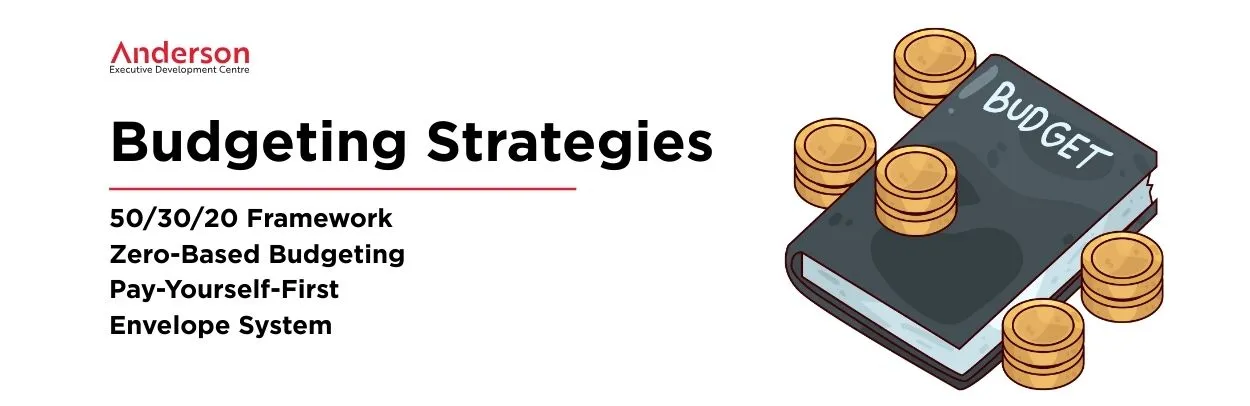
Compare Popular Budgeting Strategies at a Glance
Now that you have a clear financial snapshot, it's time to choose the framework that will bring it all together. There is no single "best" budget. The right budgeting method for you depends on your personality, your financial goals, and how much detail you want to manage.
Think of these different budget types as tools in a toolbox. A mechanic wouldn't use a wrench for every job, and you shouldn't force yourself into a system that doesn't suit your style. The key to long-term success is finding a method you can stick with.
Here’s a breakdown of the most popular and effective budgeting strategies to help you decide.
-
The 50/30/20 Framework: Needs vs. Wants vs. Savings/Debt
This is a fantastic starting point for beginners because of its simplicity and flexibility. Instead of tracking every single line item, you categorize your spending into three broad buckets based on your net income.
- 50% to Needs: These are your essential must-haves for living. This category includes housing (rent/mortgage), utilities, groceries, transportation (car payment, gas, bus fare), minimum debt payments, and basic insurance.
- 30% to Wants: This is your lifestyle and discretionary spending. It covers dining out, entertainment, hobbies, shopping for non-essentials, vacations, and subscription services.
- 20% to Savings and Debt Repayment: This is your financial priority bucket. It includes building an emergency fund, retirement contributions (beyond any employer match), investments, and any extra payments toward debt principal (like paying off credit cards faster).
Best for: People who want a simple, guiding structure without getting bogged down in micro-details. It's a great macro-level approach to ensure you're balancing your lifestyle with your financial health.
-
Zero-Based Budgeting: Assign Every Dollar a Purpose
This method, popularized by Dave Ramsey, is as detailed as it gets. The core principle is that your income minus your expenses must equal zero at the end of the month. This doesn't mean you spend all your money; it means you "give a job" to every single dollar, whether that job is spending, saving, or investing.
You start with your net income and subtract all your planned expenses, savings contributions, and debt payments until you have zero left. If you have money left over, you assign it a job (e.g., "extra $100 to student loans"). If you're short, you need to adjust your spending in other categories.
Best for: Detail-oriented individuals who want maximum control over their finances. It's extremely effective for paying off debt aggressively or for those who need a structured plan to stop overspending.
-
Pay-Yourself-First (Reverse Budgeting): Prioritize Savings First
This strategy flips the traditional budgeting model on its head. Instead of spending first and saving what's left, you save first and spend what's left. As soon as you get paid, you automatically transfer a predetermined amount directly into your savings, investment, and debt accounts.
Once your future self is paid, you can use the remaining money for your monthly expenses and wants without guilt or complex tracking. This method makes saving an automated, non-negotiable habit.
Best for: Savers and those who struggle with consistently funding their goals. It's perfect for anyone who finds other methods too restrictive and prefers to "set it and forget it."
-
Envelope System (Cash Stuffing): Tactile Category Limits
This is a classic, tangible method for controlling discretionary spending. You decide how much cash to allocate to specific spending categories each month (e.g., $400 for groceries, $150 for gas, $200 for entertainment). You then place that cash into physical envelopes labeled for each category.
Once the cash in an envelope is gone, you cannot spend any more in that category until the next month. This creates a powerful visual and physical barrier to overspending. While traditionally done with cash, many apps now simulate digital "envelopes."
Best for: Visual learners, those who struggle with overspending on debit/credit cards, and anyone who benefits from a strict, hands-on approach to managing their money.
The goal isn't to find the "perfect" budget but the one that is perfect for you. Experiment with one of these budgeting systems for a month or two. If it doesn't feel right, try another. The best budget is the one you'll actually use.
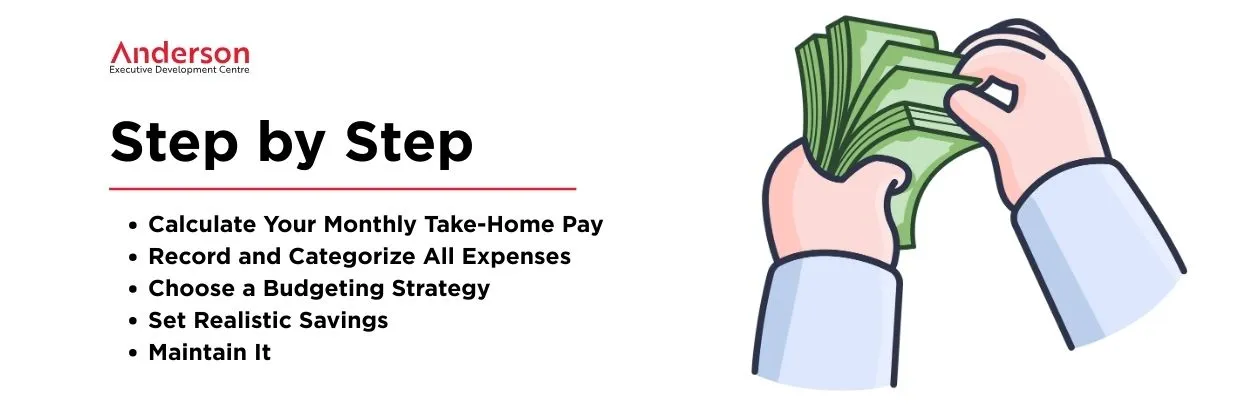
How to Build Your Budget — Step by Step
You have your financial snapshot, and you've explored the different methods. Now, let's roll up our sleeves and build your personalized budget. This isn't about creating a restrictive set of rules; it's about designing a financial plan that empowers you. Follow these steps to turn the theory into a living, breathing tool for your life.
Step 1: Calculate Your Monthly Take-Home Pay
This is your starting line. Your budget is built on a foundation of reality, and that reality is your net income—the actual amount that lands in your bank account after taxes, health insurance, retirement contributions, and other deductions.
-
If your income is steady: Grab your most recent pay stub. Identify your net pay and multiply it by the number of times you get paid each month. (e.g., If you are paid bi-weekly, multiply by two. For a more accurate annual picture, multiply your bi-weekly check by 26 and then divide by 12).
-
If your income is variable: Use the average monthly income you calculated from your financial snapshot. It's wise to use a conservative (lower-end) estimate to avoid overspending.
This final number is your total monthly budget. Every dollar you plan will come from this amount.
Step 2: Record and Categorize All Expenses
Now, list every single expense you have. This is where the work from your "financial snapshot" pays off. Use your bank statements, receipts, and spending trackers to get a full and honest list.
Categorize each expense. Common categories include:
- Housing: Rent/Mortgage, Property Taxes, HOA Fees
- Utilities: Electricity, Water, Gas, Internet, Cell Phone
- Transportation: Car Payment, Gas, Maintenance, Public Transit Pass
- Food: Groceries, Dining Out
- Lifestyle: Entertainment, Subscriptions, Hobbies, Personal Care
- Insurance: Health, Car, Renter's/Homeowner's
- Debt: Student Loans, Credit Card Payments, Personal Loans
- Savings & Giving: Emergency Fund, Retirement, Investments, Charitable Donations
Be thorough. The more accurate you are here, the more effective your budget will be.
Step 3: Choose a Budgeting Strategy and Apply It
This is where you give your budget its structure. Refer to section 3 and choose the framework that resonates with you.
- Using the 50/30/20 Rule? Multiply your total monthly net income by 0.5, 0.3, and 0.2. This gives you your target spending limits for Needs, Wants, and Savings/Debt.
- Using Zero-Based Budgeting? Start with your income and subtract every planned expense, savings contribution, and debt payment until you hit zero. Adjust categories until everything is assigned.
- Using the Pay-Yourself-First method? Decide on the amount you will save first (e.g., 20%), transfer it immediately upon payday, and plan your spending with the remaining 80%.
This step is about applying the percentages or allocations from your chosen method to your real numbers.
Step 4: Set Realistic Savings and Debt-Repayment Goals
Your budget is the engine that will drive you toward your financial objectives. Now is the time to be specific.
- What are you saving for? A $1,000 emergency fund? A $5,000 vacation? A down payment? Set savings goals that are SMART: Specific, Measurable, Achievable, Relevant, and Time-bound.
- What debt are you tackling? Are you focusing on the debt snowball (paying smallest balances first) or the debt avalanche (paying highest interest rates first)? Decide on a strategy and allocate any extra money in your budget toward this goal.
Plug these specific, monthly dollar amounts into your budget as non-negotiable line items, just like rent.
Step 5: Select Your Tools to Maintain It
A budget is not a "set-it-and-forget-it" plan; it's a living document you maintain monthly. Consistency is key, and the right budgeting tools make it effortless.
- Budgeting Apps: Tools like You Need A Budget (YNAB), Mint, or EveryDollar connect to your accounts, automatically categorize transactions, and show your progress in real-time. These are powerful budgeting apps for the tech-savvy.
- Spreadsheets: Customizable Google Sheets or Excel templates offer total control and don't require linking your bank accounts. (A simple search for "free budget template" yields thousands of options).
- Pen and Paper: Sometimes, the physical act of writing things down creates a stronger connection. A simple notebook dedicated to your budget can be incredibly effective.
Choose a tool that feels intuitive and easy for you to use regularly. The best system is the one you'll actually stick with. Your first budget won't be perfect—and that's okay. You will refine it each month as you learn more about your spending habits.
Explore Our Course For Professionals> Complete Course on Budgeting
Smart Ways to Reduce Spending on Needs and Wants
Creating a budget often reveals opportunities to free up cash. The goal isn't to live a life of deprivation, but to make smarter choices that allow you to fund the things you truly care about. You can reduce expenses significantly by optimizing your spending on both essentials and luxuries. Here are practical strategies to save money on necessities and trim variable costs without drastically altering your lifestyle.
Audit and Renegotiate Fixed Bills
Your fixed expenses are the low-hanging fruit for saving money. A few phone calls or a little research can yield significant monthly savings.
- Insurance: Loyalty often costs you. Once a year, get quotes from other providers for your auto, renters, or homeowners insurance. Use these quotes as leverage to ask your current provider for a better rate. Simply asking, "Is there any discount or way to lower my premium today?" can work.
- Phone & Internet Bills: Call your provider and ask about retention deals or competitor promotions. Consider switching to a discount mobile carrier (like Mint Mobile, Visible, or Google Fi) that uses major networks for a fraction of the cost. Do you really need that ultra-high-speed internet, or would a standard plan suffice?
- Subscription Audits: This is a major one. Go through your bank and credit card statements and list every single subscription and membership—streaming services, software, gyms, monthly boxes, etc. Cancel anything you don't use regularly. For the ones you keep, consider sharing family plans with friends or family or switching to annual billing if it offers a discount.
Master Your Grocery Shopping
Food is a essential need, but it's also a area where budgets bleed money quickly. With a few strategic grocery shopping hacks, you can slash your bill.
- Plan Meals & Make a List: Plan your meals for the week and build a precise shopping list around those meals. This prevents impulse buys and ensures you only purchase what you need.
- Embrace Generic Brands: For staple items like rice, pasta, canned goods, spices, and medication, store-brand products are often identical to name brands but cost significantly less.
- Shop with a Calculator: Keep a running total of your cart (on your phone or a pocket calculator) as you shop. This keeps you acutely aware of your spending and helps you stay within your budget.
- Never Shop Hungry: It’s a classic tip because it’s true. Shopping on an empty stomach leads to more impulsive, often less healthy, and more expensive purchases.
Strategically Trim Variable & Discretionary Spending
This is about being mindful, not miserly. Small changes to your habits can add up to big savings over time.
- Implement a "Wait 24 Hours" Rule: For any non-essential purchase over a certain amount (e.g., $50), force yourself to wait 24 hours before buying. This cooling-off period helps you distinguish between a fleeting want and a genuine need, drastically reducing impulse spending.
- Become a Master of Free & Cheap Entertainment: Challenge yourself to find low-cost ways to have fun. Utilize your local library for books, movies, and even free passes to museums. Have picnics in the park, go hiking, host a game night, or explore free community events instead of expensive nights out.
- Reduce Energy Costs: This is a double win: you save money and help the planet. Simple actions like switching to LED bulbs, unplugging electronics that aren't in use ("vampire power"), using a programmable thermostat, and washing clothes in cold water can trim variable costs on your utility bill every month.
- Rethink Your Transportation: If possible, combine errands to make fewer trips. Consider carpooling, using public transit, or biking for some journeys. Even doing this once a week can save on gas and vehicle wear and tear.
The money you save from these strategies isn't meant to vanish. Immediately redirect it toward your savings goals or debt repayment plans. This turns mindful spending into powerful financial progress, making the effort feel incredibly rewarding.
Explore - for Professions> Agile Project Budgeting Training Course
Reviewing and Refining Your Budget Regularly
A budget is not a stone tablet etched with permanent rules. It is a living, breathing document that must evolve as your life does. The most common reason budgets "fail" is that people treat them as a one-time project rather than an ongoing practice. Embracing a flexible budgeting mindset is the key to long-term success. This means committing to a regular budget review process where you track your progress, celebrate wins, and make necessary adjustments without guilt.
Track Your Progress Consistently
You built the plan; now you need to see how it's working in the real world. This isn't about micromanaging every penny every day, but about maintaining awareness.
- Weekly Check-Ins: Set aside 5-10 minutes each week to quickly reconcile your spending. Open your budgeting app or spreadsheet and compare your planned spending against your actual transactions. This ensures you catch overspending early in the month, when you can still course-correct, rather than being surprised on the 30th.
- Monthly Meetings with Your Money: At the end of each month, conduct a full review. This is the most important habit you can build. Look at the entire month's data:
- Did you stay within your categories?
- Which categories did you overspend in? Which did you underspend in?
- Were you able to meet your savings and debt goals?
This isn't a time for self-criticism. It's a time for neutral, curious analysis. Think of yourself as a financial detective looking for clues about your habits.
Adjust Your Budget When Life Changes
Your budget must reflect your current reality, not last month's plan. Life is unpredictable, and a rigid budget will break. A flexible budget bends instead.
You must adjust your budget when you experience:
- A change in income: A raise, a new job, a side hustle, or a loss of income.
- A change in expenses: Rent increases, a new car payment, or a paid-off loan.
- A change in life circumstances: Getting married, having a child, moving to a new city, or unexpected medical bills.
When these events happen, go back to your budget and reallocate your money to match your new situation. This is a sign of proactive control, not a budget failure.
Refine Your Categories and Method
Your initial budget is a best guess. Your monthly review is where you turn that guess into a precise tool.
- Refine Categories: Was your "Dining Out" category consistently too low? Adjust it to be more realistic. Did you have a "Miscellaneous" category that ballooned? Break it down into more specific categories to understand where that money is actually going.
- Change Your Strategy: Perhaps you started with the 50/30/20 rule but found you needed more detail to control your spending. It might be time to try Zero-Based Budgeting. Or maybe you found detailed tracking exhausting and want to switch to the simpler Pay-Yourself-First method. The budget review process helps you identify if your chosen method is truly working for your personality.
This cycle of tracking, reviewing, and adjusting is what makes a budget powerful. It transforms it from a static spreadsheet into a dynamic tool for financial mindfulness. Each month, you get better—not just at budgeting, but at understanding your own habits and priorities. This ongoing refinement is the engine that will ultimately drive you to your financial goals.
Explore - For Professionals: Planning, Forecasting & Budgeting using Spreadsheet
Extra Tips to Make Budgeting Stick
Creating a budget is one thing; living with it consistently is another. The path to financial success is paved with good intentions, but it's sustained by smart systems and psychological tricks. The final piece of the puzzle isn't math—it's behavior. Here are powerful budgeting tips and behavioral hacks designed to answer the ultimate question: how to stick to a budget for the long haul.
-
Automate Everything Possible
Willpower is a finite resource. The single most effective budgeting tip is to remove the need for it entirely by setting up automation.
- Automate Savings: Set up automatic transfers from your checking account to your savings or investment accounts to occur on the same day you get paid. This enforces the "Pay-Yourself-First" method flawlessly. If you never see the money, you can't accidentally spend it.
- Automate Bill Pay: Schedule all your fixed expenses (rent, mortgage, utilities, insurance) to be paid automatically. This prevents late fees and simplifies your money management, so you only have to actively decide on your variable discretionary spending.
Automation turns your financial goals into the default setting, making success effortless and automatic.
-
Funnel Windfalls Toward Your Goals
Unexpected money—a tax refund, a work bonus, a gift, or even a side hustle payment—presents a massive opportunity. While the temptation to splurge is real, strategically using windfalls can supercharge your progress.
- The 80/20 Rule for Windfalls: A great way to balance discipline and reward is to allocate 80% of any windfall to a financial goal (e.g., debt, emergency fund, down payment) and 20% for guilt-free fun money. This allows you to celebrate the win without derailing your plan.
- Create Momentum: Applying a $500 tax refund to a credit card balance can knock months off your debt-free date. Putting a bonus into your down payment fund can bring you visibly closer to owning a home. These big jumps in progress provide a huge motivational boost.
-
Reward Small Wins and Don't Fear Mistakes
A budget that feels like a punishment will never last. It's vital to build in positive reinforcement and maintain perspective.
- Celebrate Milestones: When you pay off a credit card, hit a savings goal, or simply stick to your grocery budget for a full month, celebrate! Acknowledge your hard work. Your reward doesn't have to be expensive—a special meal at home, a fun outing, or just taking a moment to feel proud can reinforce the positive behavior.
- Practice Self-Compassion: You will have months where you overspend. Everyone does. Life happens. The key is to not throw the entire budget out the window after one mistake. A lapse is not a collapse. Review what happened during your monthly budget review, learn from it, and simply get back on track next month. This resilience is what separates long-term success from short-term attempts.
Building a budget is a skill, and like any skill, it takes practice. By automating your success, leveraging surprises, and rewarding your progress, you stop fighting against your budget and start working with it as a partner in achieving the life you want.
Explore -For Professionals> Budgeting & Operational Cost Control Course
Quick Answers on "How to Budget Money"
Starting your budgeting journey brings up a lot of common questions. You're not alone! Here are quick, clear answers to some of the most frequently asked questions about how to budget money.
Q: How much should I save each month?
A: A great rule of thumb is to aim for 20% of your net income. This is a central tenet of the 50/30/20 budgeting method. This 20% should be directed toward:
- Building an emergency fund (3-6 months of expenses).
- Saving for retirement (in a 401(k) or IRA).
- Paying down debt above the minimum payments.
- Other long-term goals (like a down payment on a house).
If 20% feels impossible right now, don't be discouraged. Start with what you can—even 5% is a powerful start. The key is to begin the habit and gradually increase your savings rate over time.
Q: What counts as a need vs. a want?
A: This is a fundamental distinction in budgeting. Here’s a simple way to think about it:
- A Need: Something essential for your basic survival and ability to function in society. This includes housing, utilities, basic groceries (not pre-made meals), necessary transportation, basic clothing, and essential insurance. Tip: If you’d face significant consequences (like eviction, repossession, or having your utilities shut off) for not paying it, it’s a need.
- A Want: Something that enhances your lifestyle but isn't strictly essential. This includes dining out, entertainment, premium cable packages, luxury goods, vacations, and most subscription services. Tip: The "want" is often the specific upgrade or brand choice. For example, "food" is a need; "sushi dinner at a restaurant" is a want.
The line can sometimes be blurry (e.g., is a gym membership a "health need" or a "lifestyle want?"), so you must define these categories based on your own honest assessment.
Q: Which budgeting method is best for beginners?
A: The 50/30/20 budget is widely considered the best starting point for beginners. Its simplicity is its greatest strength. Instead of tracking dozens of detailed categories, you just focus on three main buckets: Needs (50%), Wants (30%), and Savings/Debt (20%). This makes it less overwhelming and easier to maintain while you build the habit of tracking your income and expenses.
For those who need more structure to control spending, the Zero-Based Budgeting method is extremely effective, though it requires more hands-on effort.
Q. How can I use apps and tools to budget money more efficiently?
A: Budgeting apps like Mint, YNAB (You Need a Budget), or simple spreadsheet templates can make the process easier by tracking expenses automatically and categorizing them in real time. Many tools also offer alerts when you overspend, as well as visual charts to show where your money goes. These digital aids help keep you accountable and save time, ensuring your budget remains up to date without requiring manual calculations.
Q: How often should I review and adjust my budget?
A: Budgets are not one-time plans; they should be reviewed regularly. At minimum, check your budget monthly to compare actual spending with your goals. Life changes—such as a new job, moving, or unexpected medical expenses—may require adjustments. Reviewing frequently ensures that your budget stays realistic and continues to serve your financial objectives.
Q. Can budgeting help me get out of debt faster?
A: Yes, budgeting is one of the most powerful tools for debt repayment. By tracking spending and creating categories, you can identify extra funds to put toward debt. Strategies like the debt snowball (paying off small debts first) or debt avalanche (tackling high-interest debts first) can be applied within your budget. Allocating part of your income specifically to debt reduction helps accelerate repayment and minimizes interest over time.
Other Recourses:
-
What is the 50/30/20 Rule? In Detail
-
What is Zero-Based Budgeting?
-
Bookkeeping vs Accounting
-
How to Prepare a Cash Flow Statement
-
Assets vs Liabilities vs Equity
Conclusion & Call to Action
Mastering your money doesn't happen by accident—it happens by design. Throughout this guide, you've learned that knowing how to budget money is the cornerstone of that design. It’s the tool that provides clarity, reduces stress, and turns your financial dreams from abstract ideas into achievable goals. We've broken down the process into actionable steps: from gathering your financial snapshot and choosing a strategy that fits your life, to refining your plan and building habits that ensure long-term success.
The most common mistake is waiting for the "perfect time" to start. That day will never come. The best time to create a budget and take control was yesterday; the second-best time is right now.
You have the knowledge. You have the tools. The only step left is to begin.
Your journey to financial freedom starts today. Don't overcomplicate it. Start budgeting now by grabbing a piece of paper, opening a spreadsheet, or downloading a budgeting app. Take just 15 minutes to calculate your net income and list your expenses. That single, immediate action is the most powerful step you can take.
What are you waiting for? Create your budget and start building the future you deserve.
